OFSAA Try Day Returns – Apply NOW!!

Try Day Returns In 2022-23!

Sep 22, 2022 | Leadership OpportunitiesWellness

TRY DAY News Cover Website 2022

Motivate your students!

Don’t miss out!

Leadership and inclusion opportunities.

Take advantage during the 2022-23 school year by applying for an OFSAA TRY Day grant. The Ontario Ministry of Education has again provided a grant of up to $700 for schools to enhance their athletic/activity programs and to encourage all students to get active again.

First-time applicants and small, rural schools will receive priority.

Now more than ever is the time to build the OFSAA TRY Day program into your schedule of leadership courses, intramurals, special activity days, or fitness programs.

APPLY TODAY!

FOR MORE INFORMATION AND TO REGISTER PLEASE CLICK HERE.

Post-Concussion Syndrome in Sport: What You Should Know

Article: Post-Concussion Syndrome In Sport: What You Should Know

Sep 21, 2022 | ArticleConcussionWellness

Concussion Syndrome

Article from SIRC (Sept. 21/22)

by Kerry King, Connect Speech Therapy

Sport-Related Concussion has become recognized as a major health problem that affects millions of people around the world annually (Wang et al., 2016). In Canada, sport and recreational activities account for a large proportion of concussions, particularly amongst children, adolescents and young adults (Government of Canada 2018).  

Most concussed individuals recover within 4 weeks. Typical symptoms may include headaches, nausea, dizziness and light sensitivity. However, there is a small proportion of individuals (15-30%) who continue experiencing symptoms and challenges weeks and months after a concussion (Parachute, 2017).  

In this blog, I will provide information about concussion symptoms that take a longer time to improve and may impact an athlete’s cognitive and communication functioning in significant ways. I will also include information about how speech-language pathologists can play a role in recovery.

CONCUSSION AND SPORT

In general, concussion is a form of traumatic brain injury termed “mild traumatic brain injury.” However, even though they are labeled “mild,” this type of brain injury can have significant effects on individuals’ lives (Cleveland Clinic, 2020). 

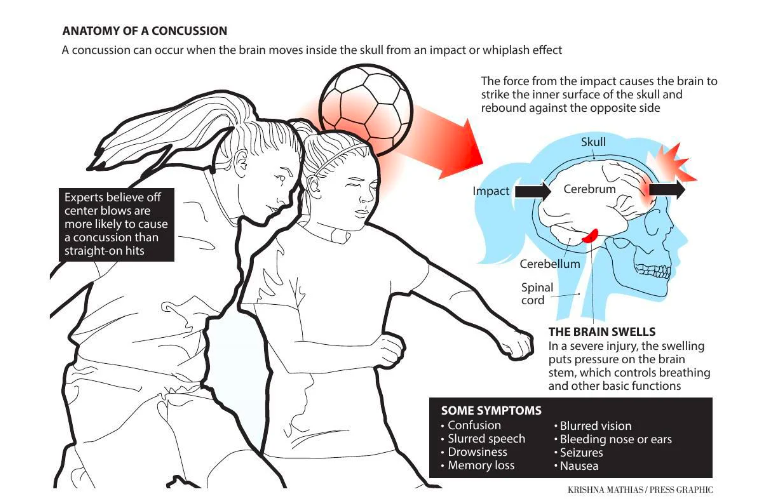
Anatomy of a concussion
Press of Atlantic City; KrishnaMathiasArt.com

Concussion results from an impact to the head that impacts the brain. Once impacted, the brain (which is made of fragile, squishy, jelly-like tissue) stretches and bruises, damaging nerve cells and blood vessels and causing a cascade of chemical changes to occur. The damage and chemical disruption results in an acute, temporary loss of normal brain function. When this injury happens to a person participating in an athletic activity or sport, it is considered a “Sport-Related Concussion.”

POST-CONCUSSION SYNDROME (PCS)

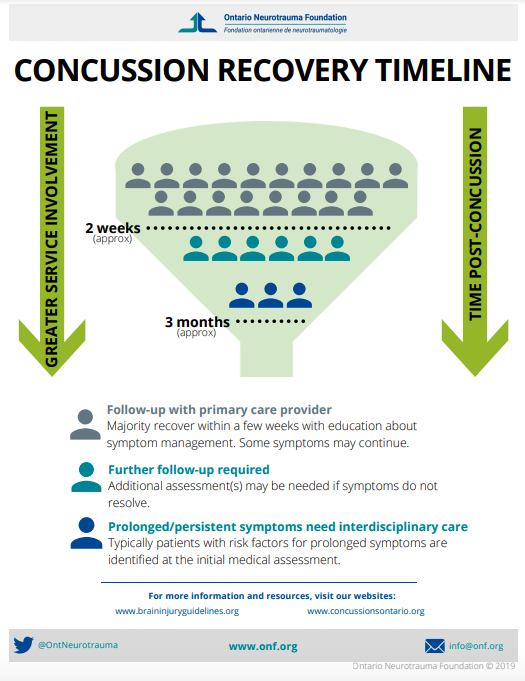
According to some researchers, most children recover from concussion within 4 weeks, while adults typically recover within 2 weeks. A single concussion does not usually result in permanent brain damage. As long as another concussion does not occur shortly after the first one, most athletes do not experience ongoing clinical or cognitive symptoms (Parachute, 2017; Cleveland Clinic, 2020). 

However, even after a single concussion, 15-30% of individuals do not fully recover within the expected timeframe. This is often referred to as Post-Concussion Syndrome (PCS) (McCrory, 2017), Persistent Post-Concussion Syndrome (PPCS), or, in sport, Persisting Symptoms after Sport-Related Concussion (Herring et al., 2021). Typically, by 1 to 3 months post-concussion, if concussion symptoms persist, a trained health professional will monitor the athlete more closely, make appropriate referrals for further assessment, and ultimately may diagnose the athlete with Post-Concussion Syndrome. 

PCS AND ACQUIRED COGNITIVE-COMMUNICATION DISORDER (ACCD)

Of the various symptoms that may persist past the expected concussion recovery timeframe, concussed athletes may experience ongoing challenges with cognition and communication, termed “Acquired Cognitive-Communication Disorder” (ACCD) (Ontario Neurotrauma Foundation 2017).   

Communication is a highly complex process that relies on the proper, intact functioning of many regions of the brain so that a person can read, write, talk, listen and socialize properly. ACCD is a communication difficulty caused by underlying deficits in cognition. In an athlete’s case, a Sport-Related Concussion may lead to ACCD. 

The communication difficulties can include problems with listening, understanding spoken language, speaking, reading, writing, conversational interaction and social communication. These difficulties may occur as a result of underlying issues in areas of attention, memory, information processing, reasoning, problem solving, executive functions or self-regulation (Ontario Neurotrauma Foundation 2017). For many concussed individuals, they report feeling “dumb” long after their brain injury, when in fact they may be suffering from ACCD.

Concussion recovery timeline
Credit: Ontario Neurotrauma Foundation © 2019

ACCD can hinder one’s ability to efficiently and effectively do activities of daily living, as well as academic and work performance. Complex, fast-paced, cognitively-heavy tasks in certain sports (for example, strategic plays in football) may also be difficult.  

There are numerous examples of how ACCD issues may manifest following concussion. Often, lingering cognitive-communication challenges are only noticed after the concussed person physically feels better. They return to regular activity, but then struggle with complex, fast-paced or new cognitive-based tasks and demands. For example, a concussed football quarterback struggling with memory may experience difficulty recalling short-term or long-term information, difficulty remembering details of conversations, or difficulty learning new information to efficiently complete high-level, strategic plays on the field.  

WHAT SHOULD AND CAN BE DONE ABOUT ACCD?

PCS and resulting ACCD may impact an athlete’s ability to perform their regular cognitive-communication related tasks of daily life, school, work or sport. So, it is important to flag ACCD early so that the appropriate supports can be put into place and training/rehabilitation can be initiated to optimize recovery.  

When working with a team of professionals managing Post-Concussion Syndrome, it is crucial to involve a speech-language pathologist (Ontario Neurotrauma Foundation, 2017). Speech-language pathologists are allied health experts who have unique training in areas of cognition and communication. They work closely with physicians, neuropsychologists, occupational therapists and physiotherapists to assist athletes improve their skills for all aspects of daily life. 

Given the impact of concussions globally, it is important for anyone involved in sport to be aware of the exceptions to the typical concussion experience. That is, what if an athlete is not recovering fully and fast enough in all aspects of functioning? Does the athlete struggle with ACCD and need more help?

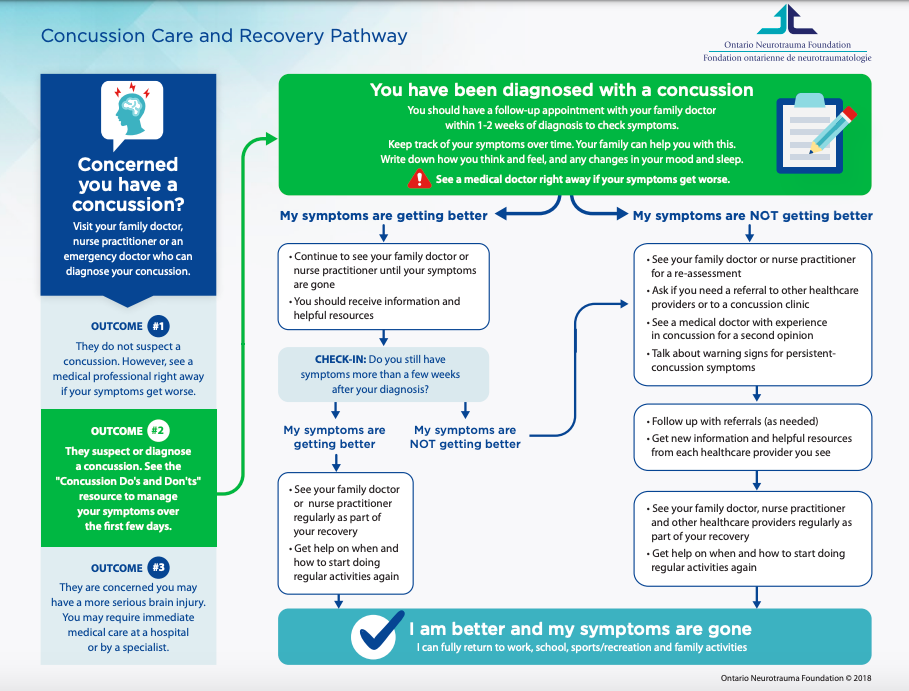
Concussion Care and Recovery Pathway
Credit: Ontario Neurotrauma Foundation © 2018

If persistent post-concussion symptoms are suspected following a sport-related concussion, ensure ongoing proper concussion management by involving the right health professionals as early as possible, and this should include speech-language pathologists. Doing so will help to optimize the athlete’s recovery and improve the cognitive and communication skills needed for all aspects of daily life.


About the Author(s)

Kerry King is the owner of Connect Speech Therapy and has worked as a speech-language pathologist for more than a decade. She helps adolescents and adults improve their communication, cognition and swallowing abilities. Her work includes helping brain-injured individuals, such as concussed athletes, address their cognitive-communication capabilities. 

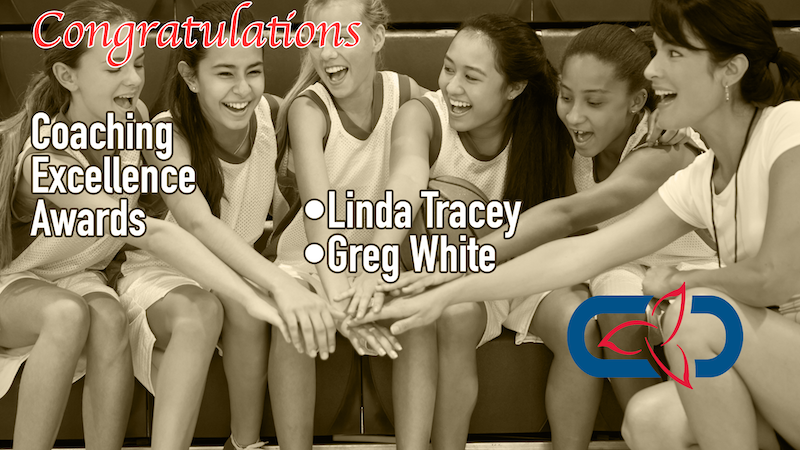
OFSAA – Congratulations To Our Coaching Excellence Award Recipients!

For 16 years, the Ontario Coaching Excellence Awards program celebrates the dedication and commitment of exemplary individuals who inspire, innovate and share knowledge of sport with others.

The Awards recognize the importance of leadership, performance and the value of human insight which are all integral to great coaching. Coaches were recognized  across Ontario at the 2022 Ontario Coaching Excellence Awards celebration on September 17.

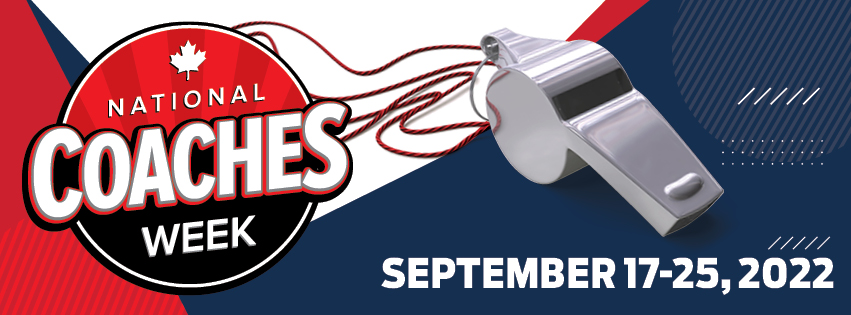
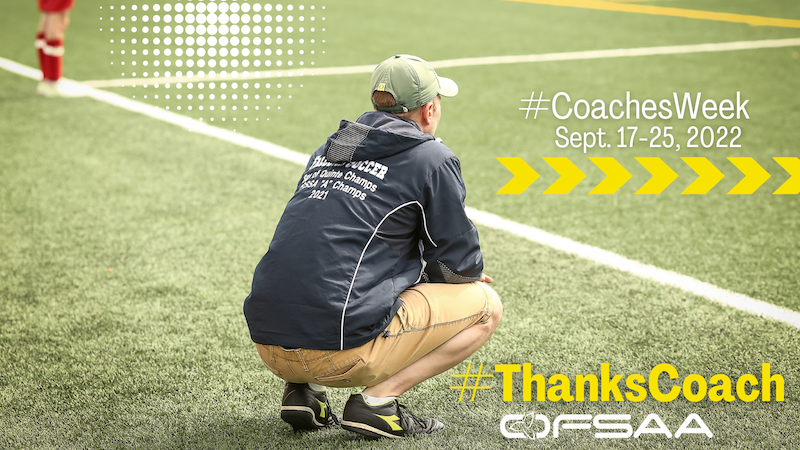
The event marked the start of the eighth annual national Coaches Week, a celebration of the tremendous positive impact coaches have on this nation’s athletes and communities. The week is an opportunity to recognize coaches for the integral role they play by simply saying #ThanksCoach.

The School Sport Coach winners were selected by OFSAA based on their unique contribution to sport through continuous development. The Award does not reflect the accomplishments of a teacher-coach in any one year, but the contributions over a period of years.

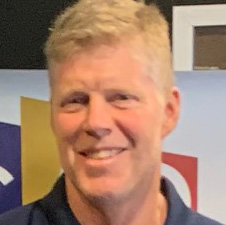
The 2022 male recipient of the “Coaching Excellence Award in the School Sport Category is: GREG WHITE – CWOSSA, Jacob Hespeler Secondary School, Cambridge, ON

Greg White has served on the WCSSAA Board of Directors throughout his tenure as Athletic Director at Jacob Hespeler. He has served on the WCSSAA Track committee that has overseen the school’s track facility which has hosted multiple CWOSSA and OFSAA regional events since its installation in 2012.

In 2018, Greg presented at the OFSAA Coaches clinic to share his process in transforming what was a modest high school when he first started, into one of the elite High School athletic facilities throughout Canada.

Greg has been a member on a number of football committees and he has overseen rule changes and adaptations to gameplay over the span of his career.

Greg has overseen the Football Championship committee for the last seven years which has given Jacob Hespeler the opportunity to host the school’s district championship games for both the senior and junior divisions.

The concept of team building, accountability and relationships is at the heart of Greg’s approach to sport in education. Greg outlines to his players the expectations they are to adhere to in order to be a student-athlete at Jacob Hespeler. He has every player sign a “players code of conduct” that reinforces the importance of behaviour amongst his athletes. This process has proven to be invaluable.

In 2005, Greg recognized that our student-athletes were being underserved as the school lacked adequate strength and fitness opportunities. As the school expanded, Greg took advantage of undeveloped space above the recently built gymnasium, and started building a weight room. It was his goal to provide the athletes and general student population with the opportunity to experience physical education through the lens of athletic training. Presently, the weight room is 9000 square feet, with a fully rubberized floor, built in lifting platforms that houses 7 “Hammer Strength” lifting racks. Adjacent to the floor is a 30 x 5 yard strip of field turf available for the students to use for speed and agility training. He was able to afford the equipment through his efforts in volunteering at the local Bingo Center in Cambridge.

Greg has always been a tremendous mentor to his staff, coaches, as well as colleagues throughout our school board. He has presented at multiple board-wide PD sessions.

His last few PD presentations have been about “Velocity Based Training” and the use of the innovative equipment called Gym Aware. The implementation of this software in our weight training classes has provided students with multiple methods of feedback on their performance as well as providing staff with the latest  equipment to ensure they are best prepared to provide a quality experience to their students. Greg has never stopped learning or improving as an educator himself and the introduction of Gym Aware only helped improve his practice as well as set a path for newer teachers to excel in the training spaces.

Greg regularly took the time to meet with members of the department to advise on key areas in education such as pedagogy, and assessment. Greg took pride in ensuring his colleagues felt confident and comfortable when it came to implementing new board and ministry directives.

Greg revolutionized the health and physical education program at Jacob Hespeler. He showed teachers within the region what an athletic department in the public education system could look like. His contributions to the athletic program will benefit thousands of students yearly for decades to come.

During the pandemic, Greg took the initiative to create minimalist daily workouts for his classes as well as for all PE classes at his school. He identified the challenges people would have to be active during isolation, and sought after practical methods to provide opportunities for students to do so. He also strongly values the importance of physical activity to mental health, and created weekly workout plans for the staff at the school to follow to help them remain active on a regular basis while society was limited in its ability to be active.

Since 2006, Greg has organized an annual ‘Powerfit Day’ at Jacob Hespeler that is designed to provide students an opportunity to learn from leaders in the sport and fitness industry. This event began to promote the importance of strength and fitness training for teen athletes as they pursued post-secondary play. Since that time, the event has evolved to promote the benefits of regular physical activity for all youth in improving their physical, mental and emotional health. Each year, Powerfit Day would bring approximately 300-400 students to Jacob Hespeler from schools within the KW region as well as Milton, Guelph and Hamilton.

In addition to coaching football for 31 years, Greg has also coached track and field, basketball, hockey, wrestling, rugby and tennis.

Congratulations Greg!

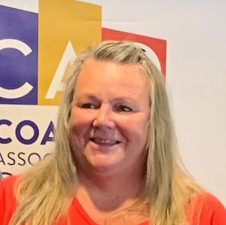
The 2022 female recipient of the “Coaching Excellence Award in the School Sport Category is: LINDA TRACEY – EOSSAA, Loyalist Collegiate and Vocational Institute, Kingston, ON

Linda’s coaching style embodies education through school sport. Through her role as an athletic director and a coach, Linda fosters the qualities of fair play, dedication, commitment, and health. While she enjoys coaching her teams to victory, that isn’t the driving force behind her coaching. The ultimate goal for Linda is to help mold kind and active humans.

Linda truly believes that engagement in your school community, especially in high school sport, is important for the social development and mental well-being of students. She encourages students to get involved and works to create barrier-free opportunities wherever possible. To her, being involved in school sport allows students to learn skills, like time management, teamwork, communication, grit, and resilience, that can be used on the court, in the classroom, and in life. She teaches these skills at every practice and during every game. Whether it’s talking a team through a tough loss, having a team work together until they reach a goal in practice, or having a pre-game lunch and pep talk, Linda always finds ways to teach students these transferable skills. Most importantly, Linda teaches her players to develop their heart. To her, heart is the willingness to dig in to achieve in spite of the odds. She teaches athletes, coaches, and colleagues that when you believe, miraculous things can happen.

Linda works tirelessly to recruit and develop coaches. Many new staff are often brought into the coaching fold, as her passion for school sport is impossible to ignore, and her drive to ensure as many teams can run as possible is contagious. In an effort to make coaching more accessible and manageable, Linda spends significant amounts of her own time organizing the nitty gritty (i.e., paperwork, transportation, uniforms, etc.). This allows coaches, new and experienced, to focus on time with their players and developing their own coaching skills.

In addition, Linda has spent many seasons working with new and less experienced coaches. She has co-coached with numerous colleagues as a way of gaining and sharing knowledge, supervised community coaches as a way of building and maintaining high school sport, and mentored junior coaches as they take on the role of Athletic Director.

Furthermore, even though Linda retired this past June, she has already promised to return and assist with school teams in the fall.

Linda’s depth and breadth of knowledge is unmatched and has become an invaluable resource in our building. With well over 32 years of experience, coaches and athletes call upon her know-how for information and advice. She is an exemplary coach and advocate for high school sport.

Linda has spent the last 32 years making people feel accomplished, feel needed, feel a part of something important. Every year, Linda shows great appreciation for everything student-athletes and coaches have contributed and accomplished. Sometimes it’s a morning announcement or a small package of home-baked cookies, other times it’s a crown for winning “Volleyball for Candy” or a timely pep talk in the middle of a staff versus students game. But that feeling of being a part of something important is never more apparent than at the year-end Recognition Celebration, which is thoughtfully organized by Linda.

An accomplished volleyball coach for over 30 years, Linda has devoted her time at the school to soccer, basketball, tennis and curling.

Thank you for the many years of dedication to school sport, Linda!

National Coaches Week – Say Thanks Coach

Saturday, September 17th is the start of National Coaches Week! Coaches can diversify their coaching knowledge with FREE or discounted NCCP education from September 17-25.

Learn more about the opportunities and all that is going on across the country this week at https://coach.ca/national-coaches-week.

Each year, thousands of people across Canada take part in National Coaches Week to say #ThanksCoach for their time, effort and generosity.

How you can take part: 

  1. Explore the Participation GuideThe National Coaches Week Participation Guide contains everything you need to make National Coaches Week a success for your coach, team, and organization.
     
  2. Enjoy FREE or discounted NCCP education: During National Coaches Week, coaches can diversify their coaching knowledge with free or discounted NCCP education. Connect with your local P/TCR, or National Sport Organization to learn more about their National Coaches Week events, or log into the Locker to access specific eLearning modules for free from September 17 – 25, 2022.
     
  3. Say #ThanksCoach on social media: Follow National Coaches Week on Facebook, Twitter, and Instagram using #CoachesWeek and #ThanksCoach. You can also use the National Coaches Week Facebook profile frame throughout the week to show your support. 
     
  4. Join a community event: Organize a community event to say #ThanksCoach, or join one taking place in your province or territory. 

In addition to using the #ThanksCoach hashtag online during National Coaches Week, we encourage all athletes, participants, parents and friends to say ‘Thanks, Coach!’ in real life too – all year round!

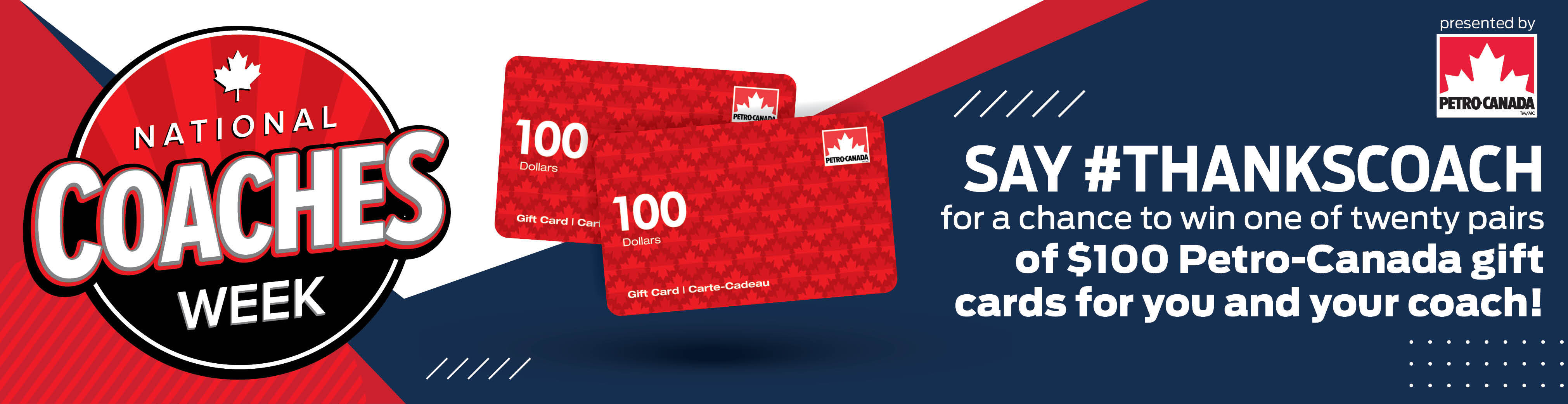
CONTEST: Enter to win a pair of $100 Petro-Canada Gift Cards for you and your coach!

We’ve teamed up with Petro-Canada to recognize and celebrate coaches from coast to coast to coast. Join us to say #ThanksCoach for a chance to win one of twenty pairs of $100 Petro-Canada gift cards for you and your coach!

It’s easy to participate – just follow these three steps!

  1. Share an Instagram post between September 17 at 12:01am ET and September 25 at 11:59pm ET
  2. Include #ThanksCoach or #MerciCoach in your post
  3. Include #PetroCanada in your post

Don’t have Instagram? Eligible Entrants may also submit an entry for the contest by mail or by email. Visit the contest page for entry details and rules and regulations. (No purchase necessary. Open to residents of Canada who are age of majority or older in their province/territory of residence. Official rules available at http://coach.ca/NCWPetro-Canada.)

SHSAA – Lessons for Concussion Management Webinar

LESSONS FOR CONCUSSION MANAGEMENT

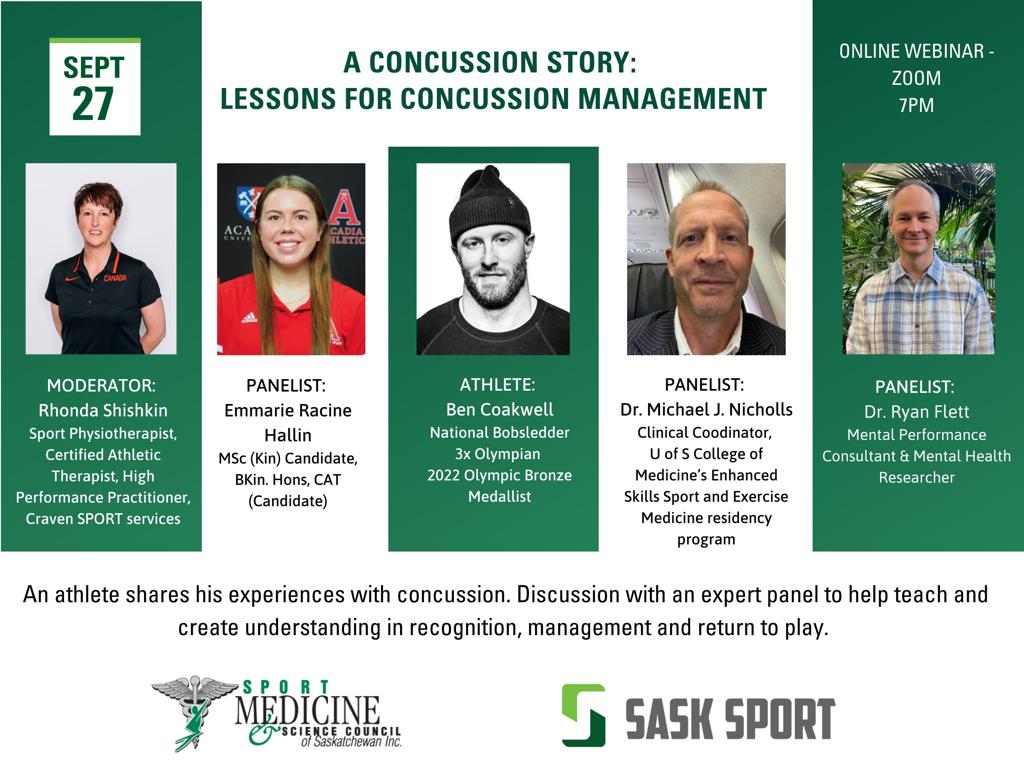
This 60-minute webinar on concussion management and return to play will feature an expert sport medicine panel and Ben Coakwell, three-time Olympic bobsledder and 2022 bronze medalist, who will share his story about dealing with concussion management throughout his career. The webinar is geared toward athletes, coaches, parents, and sports medicine practitioners.

Coaches who are maintaining their NCCP Training or NCCP Certified status will receive one NCCP Development (PD) point upon completing the webinar.

Click on the Picture for more information.

The event is scheduled for Tuesday, Sept. 27 at 7 p.m. A recording will be shared with all registered participants. You must be registered to receive the recording. The recording will be available for viewing for 30 days after the webinar.

SHSAA – hudl Town Hall

The SHSAA, in partnership with Hudl, is offering a Town Hall to provide information about the services that Hudl offers.  Athletic Directors, as well as Volleyball and Football coaches, are invited to an information session on Tuesday, September 20th from 3:30 – 4:30pm.  The Town Hall will be split into two groups:

Athletic Directors & Volleyball Coaches (Click to register)

Athletic Directors & Football Coaches (Click to register)

OFSAA 75th Anniversary Logo Contest Coming Soon

OFSAA will be celebrating its Diamond Anniversary in the 2023-24 school year but we need your artistic contribution soon.

We’d love to reward one student with a prize pack by having the concept of a unique “75th Anniversary OFSAA Logo” submission gem declared the winner this fall!

Stay tuned for contest details and prizing information.

OFSAA FALL 2022 BULLETIN NOW HERE

The latest issue of the OFSAA Bulletin Magazine is here!

We have the 2022 spring championships and festivals covered. Be sure to check out the fun team championship photos and all of the winning results from events which occurred in May and June across the province.

Interested in our 2022-23 championship and festival event calendar? Find it, along with so much more, in this issue! Just scroll across this page to start reading our online version.

Look for the magazine in your school soon!